
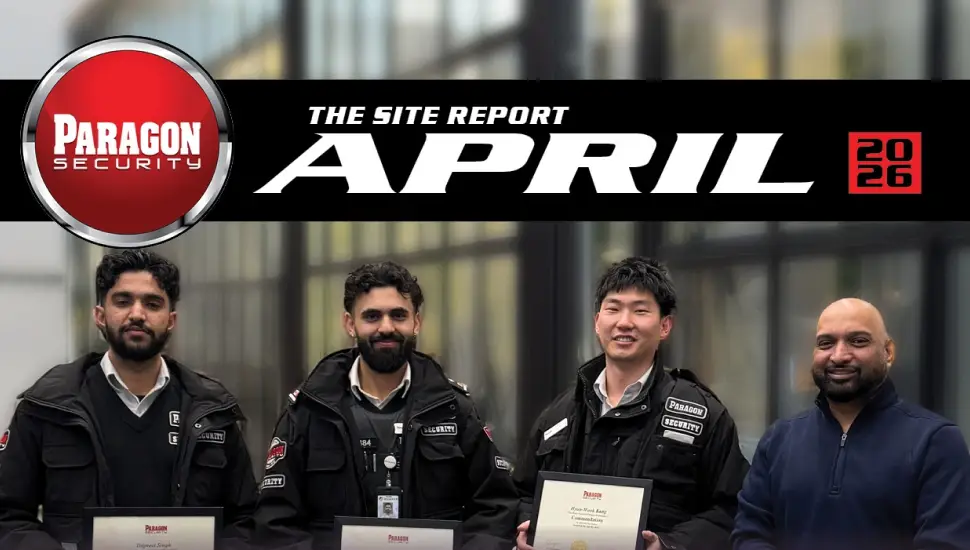
Pictured above: (L-R) Dilpreet Singh, Brightal Singla, Hyun-Wook Kang, Adnan Salam (client)
Helping Hands at Humber College
A recent incident at the Athletics Building at Humber College demonstrated how situational awareness can support an effective response to facility issues.
The problem began with an overflowing leak from a water heater located in the 2nd Floor Mechanical Room. As water continued to escape, it travelled through the structure and spread into several 1st Floor areas. Flooding was observed at the Athletics front desk, in the laundry room, and inside nearby staff offices. Broken ceiling tiles were also noted as water accumulated and began to impact the ceiling structure.
Security staff on duty recognized that the situation required immediate attention. By maintaining situational awareness of the environment and quickly identifying the source area, they were able to notify Facilities and coordinate next steps. Following direction from Facilities personnel, security staff shut off the water valves connected to the system. This action stopped the water flow and helped limit further flooding.
Once the source of the leak was controlled, housekeeping staff were advised to begin cleaning the affected areas. Their role included addressing standing water and starting the initial clean up process to help restore safe conditions in the impacted spaces.
The on call client representative was contacted and updated on the incident, including the cause of the leak, the areas affected, and the response actions taken.
Situational awareness plays a key role in incidents like this. Observing unusual conditions, reporting concerns promptly, and coordinating with partner teams helps reduce damage and supports a faster, more organized response.
PPE
Security guards work across a wide range of environments, including condominiums, construction sites, retail stores, educational institutions, parking garages, commercial buildings, outdoor properties, and emergency response situations. Each location brings its own hazards. Guards may encounter falling objects, sharp debris, dust, loud noise, moving vehicles, harsh weather, or even contact with bodily fluids. These risks can appear suddenly, especially during patrols, inspections, or incident response.
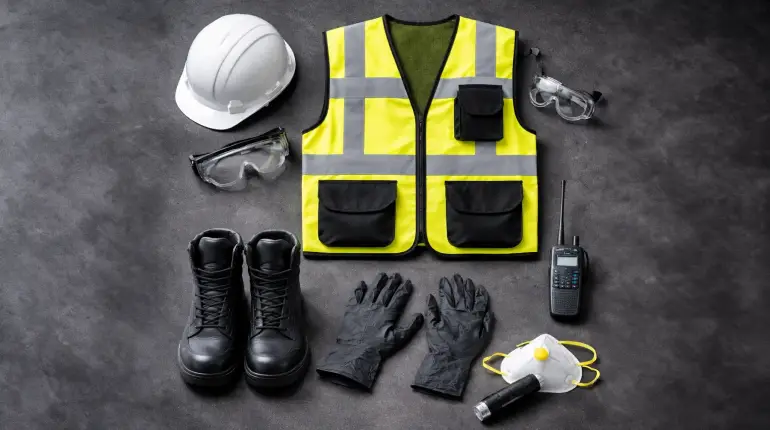
Personal protective equipment (PPE) is designed to reduce these risks and help prevent injuries. Common examples include safety footwear, hard hats, high visibility reflective vests, protective gloves, safety glasses, masks or respirators, hearing protection, face shields, and flashlights. In colder months, weather appropriate protective clothing and slip resistant boots also become important for maintaining safe footing and protection from the elements.
Under Ontario’s Occupational Health and Safety Act (OHSA), workers must wear required protective equipment when hazards are present. If site rules, post orders, or a Supervisor require PPE, it is not optional. Taking a moment to assess your surroundings before starting a task helps you choose the right equipment for the situation.
If you are unsure what is required, ask your Supervisor for guidance. Wearing the proper equipment protects you, your co-workers, and the people around you. Consistent use of PPE also demonstrates professionalism and helps maintain a safe work environment.
Clients and members of the public notice when guards follow safety practices correctly. Simple steps, such as checking your equipment before a shift, replacing damaged gear, and reporting hazards immediately, can prevent incidents and injuries before they happen. Stay alert, stay protected, and remember that safety on every site depends on everyone doing their part.
Situational Awareness
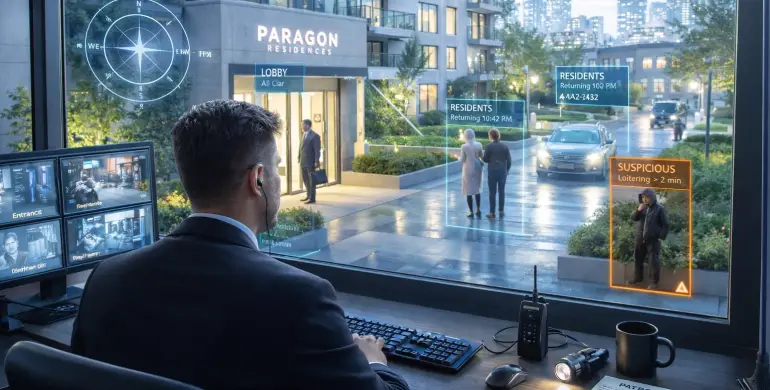
Situational awareness remains one of the most valuable skills a security professional can develop. Technology, reporting tools, and procedures all play an important role, but the guard’s ability to observe and interpret their environment often determines whether a situation is addressed early or allowed to escalate.
A practical starting point is engaging your five senses while on duty. Avoid distractions that reduce awareness, such as looking at a phone or conducting patrols without your full attention. When your senses are active, you are far more likely to notice subtle changes in your surroundings.
Another key element is understanding what is normal at your property. Every location has patterns: typical visitor traffic, normal operating hours, and common behaviours. When you know what “normal” looks like, unusual activity becomes easier to recognize. Something as simple as a door that is usually closed being left open, or a person lingering where they normally would not, may indicate that further observation is required.
Positioning also matters, particularly in public spaces. When possible, sit or stand where you have clear visibility of entrances and exits. This allows you to monitor who is entering, who is leaving, and how people are interacting within the area.
Body language can also provide valuable information. Research commonly suggests that body language represents roughly fifty-five to sixty-five percent of communication. Observing posture, movement, and facial expressions can reveal tension, agitation, or intent. At the same time, always scan a person’s hands, as they may be holding objects, signalling to others, or attempting to conceal something.
When something does not seem right, take a moment to slow down and think through your response. Many guards are trained to follow a simple decision process: Assess the situation, Plan an appropriate response, and then Act. Careful observation supports better assessment, which leads to clearer decisions and safer outcomes for everyone involved.
March Contest’s Winner :
Tajinder Singh
Correct Responses for March
- Security Breach + Breach prevention
-
Firewall Rules + Rules enforced
-
Vulnerability management + Management program
-
Access control + Control log
-
Incident response + Response plan
-
Foot patrol + Patrol vehicle
-
Gate check + Check point
-
Key control + Control matrix